
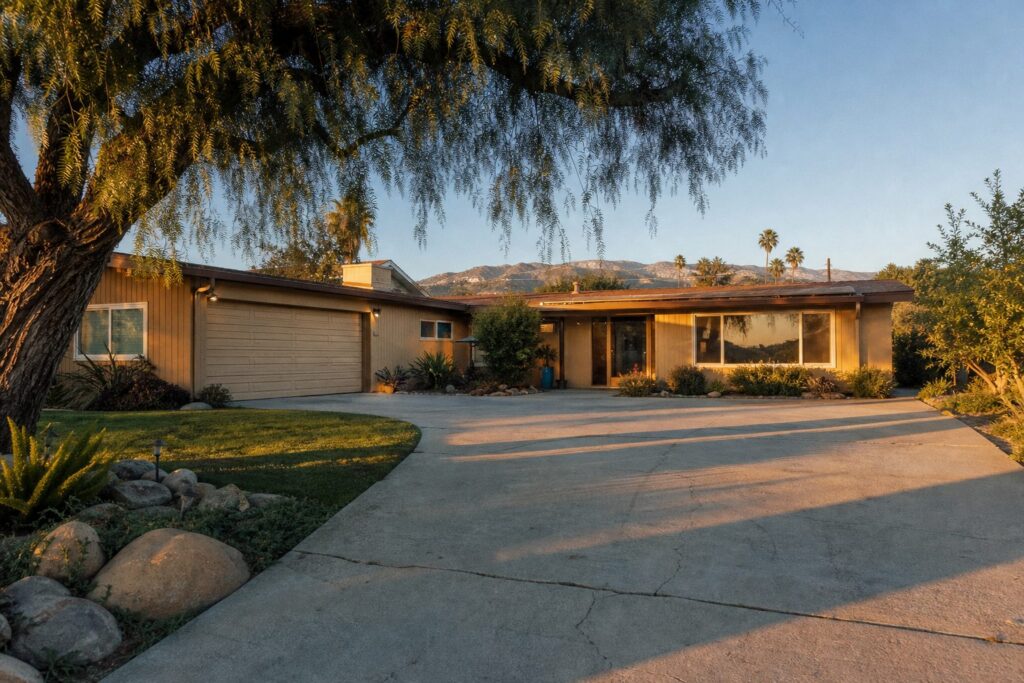
The asking price isn’t the whole story: what can you actually negotiate when buying a home in the San Fernando Valley today?
You can negotiate closing cost credits, mortgage rate buydowns, repair credits, home warranties, flexible timelines, and more. In 2026, sellers gave concessions in 46.2% of home sales nationally, and across the San Fernando Valley, 52.9% of recent transactions included seller concessions averaging $25,000, according to Redfin data reported by Scotsman Guide for the three-month period ending May 2026.
Why This Matters Right Now in the San Fernando Valley
I talk to buyers every week who fixate on the list price and forget that the real cost of buying a home is built from a dozen moving parts. Price is just the starting line. The 2026 housing market has shifted meaningfully in your favor, and if you are shopping in Northridge, Granada Hills, Sherman Oaks, Woodland Hills, or anywhere else across the Valley, you have more negotiating leverage than you have had in years.
Nationally, sellers now significantly outnumber active buyers, per Scotsman Guide’s reporting on market data as of mid-2026. That imbalance is creating real flexibility. What I tell my buyer representation clients is simple: do not leave money on the table by negotiating only on the sticker price. Closing cost credits, rate buydowns, and repair allowances can save you tens of thousands of dollars, and in more than half of Valley transactions right now, sellers are already agreeing to them.
So what exactly can you ask for? Let me walk you through every negotiable item that matters.
Seller-Paid Closing Costs: Your Biggest Cash Saver in the Valley
Closing costs typically run two to five percent of the purchase price, according to the Consumer Financial Protection Bureau’s guide to home buying costs. On a home in Northridge or Granada Hills, that can mean a significant chunk of cash on top of your down payment.
Here is the good news: sellers can agree to cover some or all of those costs. This includes title insurance, escrow fees, attorney costs, and recording fees. If you have enough saved for your down payment but you are tight on the cash needed to actually close, a seller credit toward closing costs can be the difference between getting into the home or walking away.
Why do sellers agree to this? Because a closing cost credit does not show up in public sale records. It preserves the headline sale price, which protects comparable values in the neighborhood. Many sellers will agree to a $10,000 closing cost credit before they will lower their list price by the same amount. As a real estate advisor who specializes in buyer negotiation, I see this play out constantly. The seller gets their number on paper, and you get real savings where it counts: your bank account at the closing table.
What does this look like in practice? If you are putting 20% down on a home listed around $900,000 in Northridge, your closing costs could run anywhere from $18,000 to $45,000. Getting the seller to cover even a portion of that is meaningful.
Rate Buydowns: The Smartest Concession Most San Fernando Valley Buyers Overlook
This is the concession I find myself explaining most often, and it is frequently the most valuable one available to you. Instead of applying a seller credit toward closing costs, you can ask the seller to fund a temporary mortgage rate buydown.
According to AmeriSave’s analysis, a buydown can drop your year-one interest rate substantially, saving you roughly $510 per month in year one and $260 per month in year two before settling at the full rate in year three. Total cash savings in the first three years can run near $19,300 between upfront and monthly savings.
Think about that for a moment. A $10,000 price reduction on a 30-year mortgage saves you a relatively small amount in monthly interest. But that same $10,000 applied as a buydown saves you far more in real, spendable cash during the first few years of ownership. In a market where 30-year fixed rates sit around 6.1% as of 2026, per national mortgage data, a buydown can make your monthly payment noticeably more comfortable during the years when you are most likely to be stretching financially.
What makes this especially powerful in the San Fernando Valley is the price point. Whether you are looking at homes south of Ventura Boulevard in Sherman Oaks at $1.2M to $1.6M or in more affordable pockets of Northridge, the monthly payment impact of a buydown scales up with the loan amount.
Repair Credits and Home Warranties in Granada Hills and Beyond
Here is something I always want my buyers to understand: the home inspection is not just a pass or fail test. It is a negotiation tool.
According to a Porch survey of approximately 1,000 home buyers, 86% of inspections identify at least one issue requiring attention, 46% of buyers use those findings to negotiate, and the average savings from inspection-based renegotiation is $14,000 off the purchase price.
But you do not always have to ask the seller to fix things before closing. In fact, I often recommend the opposite. Repair credits give you cash at closing to handle the work yourself after you move in. You control the quality of the contractors, you avoid delays and re-inspection headaches, and you keep the transaction timeline predictable. Sellers love this approach too because it removes the burden of coordinating repairs while they are trying to move out.
Home warranties are another negotiable item. You can ask the seller to pay for a home warranty covering major systems and appliances for the first year of ownership. It is a relatively small cost for the seller and meaningful peace of mind for you, especially if you are buying an older home in neighborhoods like Granada Hills or Woodland Hills where some of the housing stock dates back several decades.
What VA Buyers in the San Fernando Valley Need to Know About Negotiations
I specialize in working with VA buyers, and if you are a veteran or active-duty service member shopping in the San Fernando Valley, you have some of the most powerful negotiation tools available.
The VA loan program gives you zero down payment, no private mortgage insurance, and a seller concession cap of 4% of the loan amount. But here is where it gets really strategic: the VA separates “closing costs” from “concessions.” A seller can pay all of your allowable closing costs (title, recording, appraisal fees, origination fees, even market-rate discount points) with no percentage cap, and then still provide additional concessions up to 4% of the home’s appraised value.
That 4% concession bucket covers items like the VA funding fee, prepaid taxes and insurance, temporary rate buydowns, and even debt payoff. On a $500,000 purchase, that is up to $20,000 in concessions on top of unlimited closing cost coverage.
A major 2026 update that benefits you: as of April 2026, the VA permanently removed the restriction preventing VA borrowers from paying their buyer’s agent directly, according to VA Loan Network. This eliminates what was previously the single biggest competitive disadvantage VA buyers faced.
What does this mean practically? Seller-paid buyer-broker charges do not count as a seller concession under the current VA variance. That preserves room under your 4% cap for buydowns or other credits. With 10 five-star reviews and a Circle of Excellence designation, I have walked many VA buyers through exactly this kind of structuring. It is one of the areas where having an advisor who understands the VA program makes the biggest difference.
Flexible Timelines: The Hidden Negotiation Lever in Today’s Market
Not every concession involves money. Timing has become one of the most valuable negotiation tools you have, and it costs you nothing.
Many Granada Hills sellers, Northridge sellers, and Santa Clarita home sellers value predictability and convenience as much as they value price. If you can offer a flexible closing date, a rent-back arrangement, or an extended or shortened escrow that matches the seller’s timeline, you often gain concessions that would otherwise require a higher offer.
Think about a seller who has already found their next home and needs to close quickly. Or a seller who has not found their next place yet and needs a 60-day escrow or a rent-back after closing. Accommodating those needs creates goodwill, and goodwill translates into dollars.
How Loan Type Affects What You Can Negotiate
Your loan type determines the ceiling on seller concessions, so you need to know where you stand:
- Conventional loan, less than 10% down: Maximum seller concession is 3% of the purchase price
- Conventional loan, 10% to 24.99% down: Maximum seller concession is 6% of the purchase price
- Conventional loan, 25% or more down: Maximum seller concession is 9% of the purchase price
- VA loan: All allowable closing costs (no cap) plus up to 4% in additional concessions
Understanding these limits is critical before you submit an offer. If you are putting less than 10% down on a conventional loan, your total seller concession is capped at 3%. On a $700,000 home, that is $21,000. You need to decide whether those dollars go toward closing costs, a rate buydown, or some combination. I help my clients model exactly this scenario so we can structure the offer strategically, not reactively.
Frequently Asked Questions
Can you negotiate closing costs in the San Fernando Valley in 2026?
Yes. Across the San Fernando Valley, 52.9% of recent transactions included seller concessions averaging $25,000, as of the three-month period ending May 2026 per Redfin data reported by Scotsman Guide. Sellers frequently agree to closing cost credits because these credits do not affect the public sale price record, making them an easier concession for sellers to accept than a price reduction.
What is a mortgage rate buydown and is it worth asking for?
A rate buydown uses seller funds to temporarily lower your interest rate. According to AmeriSave’s analysis, total cash savings in the first three years of a buydown can run near $19,300. In many cases, a buydown saves you more in monthly payments than an equivalent dollar amount taken off the purchase price would save in interest over the life of the loan.
How much can a seller pay toward a VA buyer’s costs?
On a VA loan, the seller can pay all allowable closing costs with no percentage cap, plus provide additional concessions up to 4% of the home’s reasonable value, according to the VA Lenders Handbook. These are two separate buckets, meaning your total seller contribution can significantly exceed 4%.
What changed for VA buyers in April 2026?
The VA permanently removed the restriction preventing VA borrowers from paying their buyer’s agent commission directly, per VA Loan Network. This eliminates a longstanding competitive disadvantage and gives veterans and active-duty members more flexibility in how they structure their purchase.
Should I ask for repairs or a repair credit?
In most cases, I recommend asking for a repair credit rather than asking the seller to complete repairs before closing. You control contractor quality, avoid timeline delays, and reduce re-inspection risks. According to a Porch survey, the average savings from inspection-based renegotiation is $14,000.
What percentage of sellers are offering concessions in 2026?
Nationally, sellers gave concessions in 46.2% of home sales in the three-month period ending May 2026, according to Redfin data reported by Scotsman Guide. That is the highest share for any spring period since tracking began in 2019.
Can a seller pay for a home warranty?
Yes. A home warranty is a common negotiable item. You can ask the seller to pay for a one-year warranty covering major systems and appliances. It is a relatively low-cost concession for the seller but provides meaningful protection for you, especially on older homes common throughout the Valley.
How do conventional loan concession limits work?
Conventional loan seller concession limits are tied to your down payment. Less than 10% down allows up to 3%, 10% to 24.99% allows up to 6%, and 25% or more allows up to 9% of the purchase price. Knowing your limit is essential before submitting an offer.
Is it better to negotiate on price or concessions?
In many situations, concessions deliver more practical value than a price reduction. A closing cost credit or rate buydown directly reduces your cash needed at closing or your monthly payment. Sellers are often more willing to offer a credit than to lower their list price because the higher sale price protects comparable values in the neighborhood.
How do I know what to negotiate for in the San Fernando Valley?
Start with your financial priorities. If you are short on cash to close, ask for closing cost credits. If your monthly payment is the concern, a rate buydown may deliver more value. If the inspection reveals issues, a repair credit gives you control. Working with an advisor who understands the San Fernando Valley real estate market and these strategies, like a licensed agent with experience in buyer negotiation, ensures you structure the strongest possible offer.
The Bottom Line
The asking price is just one piece of your total home purchase cost in the San Fernando Valley. Closing cost credits, rate buydowns, repair allowances, home warranties, and flexible timelines are all on the table in 2026, and more than half of Valley transactions already include some form of seller concession. Whether you are a first-time buyer exploring Granada Hills, a VA buyer looking at Santa Clarita homes for sale, or a move-up buyer eyeing Sherman Oaks or Woodland Hills, understanding what you can negotiate beyond price is the difference between a good deal and a great one.
I am Violetta Agadjanova with Park Regency Realty, a real estate advisor with a Circle of Excellence designation, 10 five-star reviews, and California license 01983686. I specialize in helping first-time homebuyers, VA buyers, and move-up buyers across the San Fernando Valley negotiate with confidence. If you are ready to explore what is possible in your next purchase, call me at 818-620-7635. Let’s make sure you are not leaving anything on the table.