
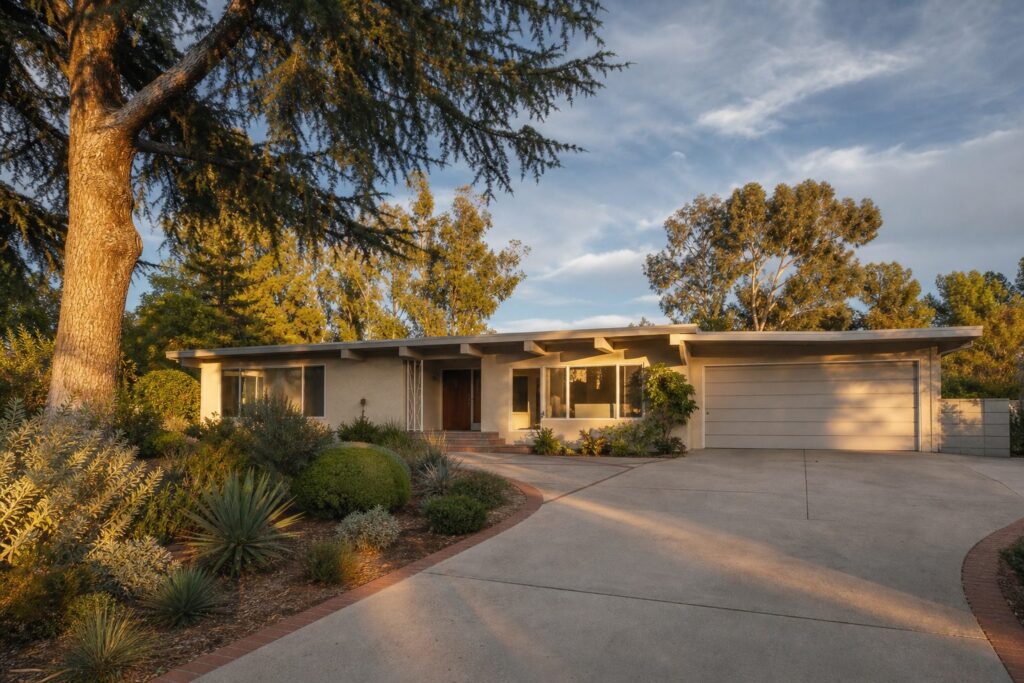
What are the most interesting facts about Granada Hills, and what makes this San Fernando Valley neighborhood so unique?
Granada Hills started as a rabbit breeding colony in 1927, exploded from 5,000 residents to 50,000 in a single decade, and hides Hollywood connections most people never hear about.
Why Granada Hills Deserves Your Attention Right Now
If you live in Granada Hills, you already know it feels different from the rest of the San Fernando Valley. But do you know *why* it feels different? This neighborhood carries a history that stretches back nearly a century, and it is packed with stories that surprise even longtime residents.
I work with buyers and sellers throughout the San Fernando Valley and Santa Clarita Valley, and one thing I notice again and again is that people who choose Granada Hills tend to stay. The community loyalty here is strong, and when you dig into the neighborhood’s past, you start to understand why. With a median home price around $1,000,000 as of September 2026 according to Resideline, people are investing seriously in this community. Understanding what makes it special can help you decide whether it is the right place for you, or help you appreciate the place you already call home.
Granada Hills Started as a Rabbit Farm, and That Is Not a Joke
Here is something that catches everyone off guard. When the community was founded in 1927, it was not called Granada Hills. It was simply “Granada,” and it was marketed as a rabbit breeding colony. According to the Granada Hills North Neighborhood Council’s historical records, roughly eighty houses were built for the first residents, and most of them included barns specifically designed for raising rabbits.
The Granada pavilion, the community’s early gathering spot, hosted the Chamber of Commerce, the Women’s Club, and yes, the Granada Rabbit Association. That last one was a real organization.
Before the rabbits, though, the land was known as the Sunshine Ranch, a working dairy farm and orchard producing apricots, oranges, walnuts, and beans. Even today, you can spot orange, lemon, or grapefruit trees in many Granada Hills yards. They are living reminders of the agricultural roots that shaped this neighborhood.
The name itself changed in May 1942, when “Granada” became “Granada Hills” to avoid confusion with Grenada, California. A small change on paper, but it marked the neighborhood’s transition from rural outpost to something much bigger.
The Population Explosion That Put Granada Hills on the Map
Want to know how fast Granada Hills grew? The population stood at approximately 5,000 in 1950 and surged to around 50,000 by 1960, according to historical records from the city council district. That is a 1,000 percent increase in a single decade, making it one of the fastest-growing communities in the entire United States during that era.
Think about what that means. In ten years, the neighborhood had to build enough homes, schools, roads, and infrastructure for ten times the people. That postwar boom shaped the housing stock you see today, particularly the mid-century tract homes in Granada Hills South that now sell in the $850,000 to $925,000 range according to current market data.
When I talk with clients about Granada Hills real estate, I always emphasize that this building boom is part of why the neighborhood has such a wide variety of housing options. You can find everything from modest 1950s ranch homes to luxury hillside properties near Knollwood Country Club pushing into the $1.6 million to $2.2 million range. That variety is a direct result of decades of continuous development.
Hollywood Filmed Right in Your Neighborhood
Did you know that one of the most iconic scenes in movie history was filmed on a Granada Hills street? The 101 Deodar Cedar trees lining White Oak Avenue, between San Fernando Mission and San Jose Street, were declared a Los Angeles Historic-Cultural Monument on August 3, 1966. Those towering Himalayan cedars became the backdrop for the flying bicycle scenes in Steven Spielberg’s 1982 film *E.T. the Extra-Terrestrial*.
But the Hollywood connections run deeper than that. Actress Jane Russell was a longtime resident of Granada Hills. Actor Ryan O’Neal also lived in the neighborhood. And the Knollwood Country Club area, with its larger custom homes, has been featured in movies, commercials, and magazines over the years.
Then there is John Elway. The NFL Hall of Fame quarterback attended Granada Hills Charter High School, and the school’s stadium still bears his name. The John Elway Stadium now serves as the home field for the Los Angeles Rampage women’s soccer team. So when you drive past that stadium, you are looking at a piece of football history.
Even the San Fernando Valley’s first oil well has a Granada Hills connection. In 1916, the valley’s first oil well was drilled at the northern tip of Zelzah Avenue, right in what is now Granada Hills, according to neighborhood historical records.
The Architectural Treasure Most People Drive Past
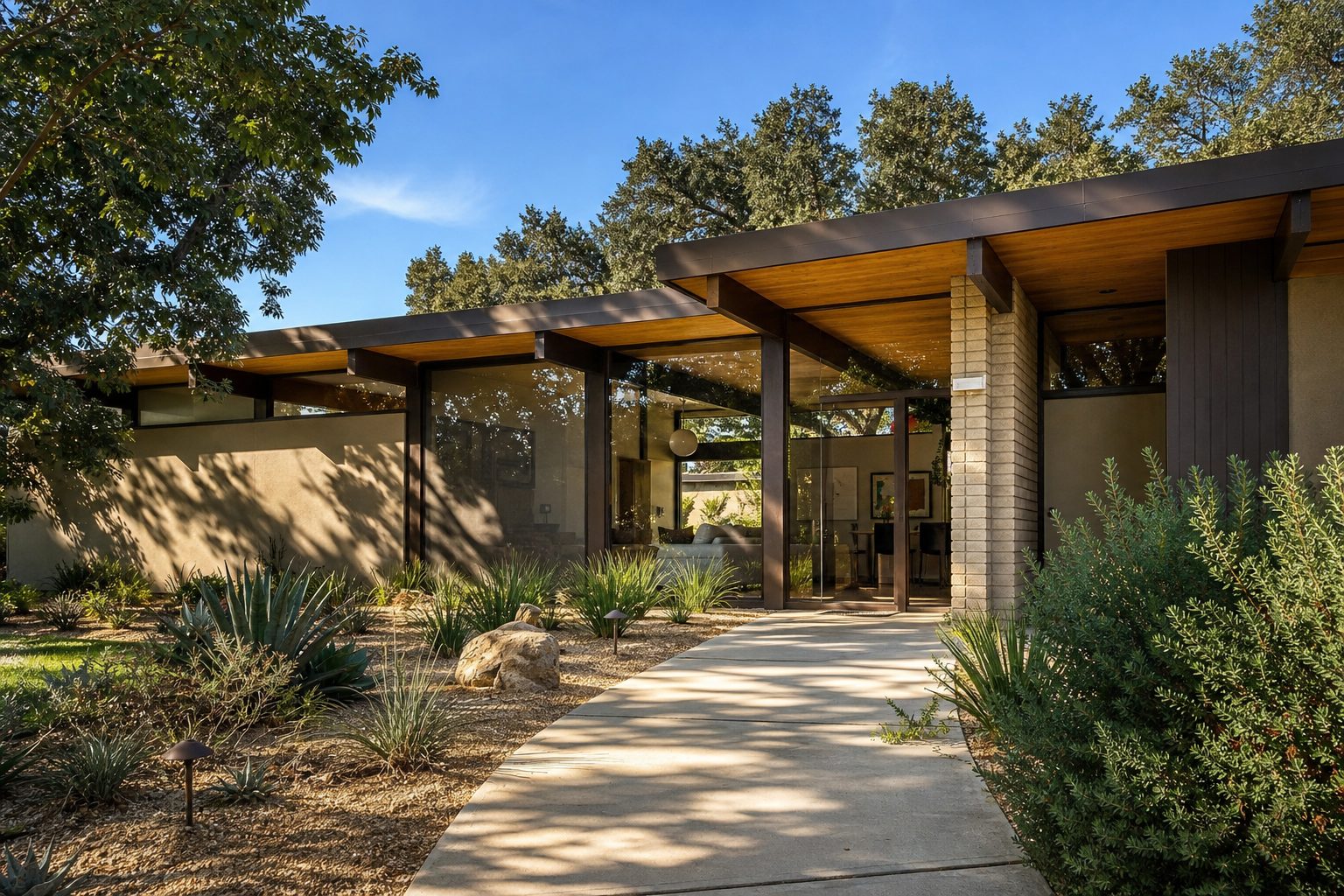
Granada Hills is home to something truly rare in Los Angeles real estate: a collection of 108 modernist homes designed by the legendary Joseph Eichler. The Balboa Highlands tract, built in the 1960s, was declared a Historic Preservation Overlay Zone in 2010 after a ten-year community effort.
What makes these homes even more remarkable is their social history. Eichler was known for refusing to discriminate against ethnic minorities at a time when that practice was widespread in real estate. He designed homes that were affordable to the middle class and open to everyone. The Balboa Highlands tract is a physical monument to that principle.
As a real estate advisor with a Circle of Excellence distinction, I can tell you that these Eichler homes generate consistent interest from both architecture enthusiasts and buyers who appreciate their open floor plans, walls of glass, and integration with the outdoors. They represent a piece of Granada Hills that simply cannot be replicated.
Green Space, Community Character, and Why People Stay
Granada Hills borders O’Melveny Park, a 672-acre wilderness area that is the second-largest park in Los Angeles, according to the city council district. Properties adjacent to the park command a premium, and it is easy to understand why. You get hiking trails, open space, and mountain views without leaving your neighborhood.
The community’s character also reflects its diversity. Census data shows Granada Hills has a population of 52,481 with the largest groups being White at 49.6%, Hispanic or Latino at 31.8%, and Asian at a share well above the national average. The median household income is $111,897, and 73% of households are owner-occupied, per Census ACS data.
That high homeownership rate tells you something important about the community. People who buy here tend to put down roots. The eucalyptus windbreaks planted in 1933 along the south side of east-west streets to protect orange trees still tower above homes today. They are, as historical records note, one of the most distinctive visual features of the entire neighborhood.
With 14 public schools and 10 private schools, Granada Hills is rich in educational options. Granada Hills Charter High School remains one of the most sought-after public charter schools in Los Angeles and is a primary driver of family demand in the area.
Frequently Asked Questions About Granada Hills
How did Granada Hills get its name?
The community was founded in 1927 as simply “Granada.” In May 1942, the name was changed to Granada Hills to avoid confusion with Grenada, California. The original name reflected the developers’ vision for the area, while the addition of “Hills” acknowledged the neighborhood’s elevated terrain along the northern edge of the San Fernando Valley.
Is it true that E.T. was filmed in Granada Hills?
Yes. The famous flying bicycle scenes in Steven Spielberg’s 1982 film *E.T. the Extra-Terrestrial* used the Deodar Cedar trees on White Oak Avenue as a backdrop. Those 101 trees were designated a Los Angeles Historic-Cultural Monument in 1966, more than fifteen years before the movie was filmed there.
What are the Eichler homes in Granada Hills?
The Balboa Highlands tract consists of 108 modernist homes designed by Joseph Eichler in the 1960s. They feature open floor plans, post-and-beam construction, and walls of glass. The tract was declared a Historic Preservation Overlay Zone in 2010, protecting these architecturally significant homes from demolition or incompatible alterations.
Did John Elway really go to school in Granada Hills?
Yes. NFL Hall of Fame quarterback John Elway attended Granada Hills Charter High School. The school’s football stadium is named John Elway Stadium in his honor and currently serves as the home field for the Los Angeles Rampage women’s soccer team.
What is O’Melveny Park?
O’Melveny Park is a 672-acre wilderness area bordering Granada Hills. It is the second-largest park in the City of Los Angeles. The park offers hiking trails and open green space, making it a major draw for outdoor-oriented residents and a value driver for nearby properties.
How diverse is Granada Hills?
Granada Hills is ethnically diverse. Per Census data, the population includes White (49.6%), Hispanic or Latino (31.8%), and an Asian population share well above the national average. Korea and Mexico are the most common places of birth among the 29.2% of residents born abroad.
What was the Sunshine Ranch in Granada Hills?
Before it was a residential community, the land that became Granada Hills was a working farm called the Sunshine Ranch. It produced apricots, oranges, walnuts, and beans. Fruit trees from that era can still be found in many residential yards today.
How fast did Granada Hills grow?
The neighborhood grew from approximately 5,000 residents in 1950 to around 50,000 by 1960, a 1,000 percent increase in one decade. This was among the highest growth rates in the nation during that period and shaped much of the housing stock you see today.
What famous people have lived in Granada Hills?
Actress Jane Russell was a longtime resident, and actor Ryan O’Neal also lived in the neighborhood. John Elway attended the local high school. The Knollwood Country Club area has been featured in various movies, commercials, and magazines over the years.
What is the median home price in Granada Hills in 2026?
As of September 2026, Resideline tracked a median closing price of $1,000,000 across 268 closed sales over six months. The middle half of sales closed between $849,999 and $1,190,000, reflecting a wide range of housing options from mid-century tracts to luxury hillside properties.
The Bottom Line
Granada Hills is not just another San Fernando Valley neighborhood. It is a community with a story that stretches from rabbit farms and oil wells to Spielberg films and architectural landmarks. Whether you are already here, thinking about buying, or simply curious about one of the Valley’s most interesting pockets, these facts tell you something important: this is a neighborhood with deep roots and lasting character.
I am Violetta Agadjanova with Park Regency Realty, and I help buyers and sellers throughout Granada Hills, the San Fernando Valley, and Santa Clarita Valley make confident real estate decisions. With 10 five-star client reviews and a passion for the communities I serve, I am always happy to talk about what makes Granada Hills special. You can reach me at 818-620-7635 any time.