
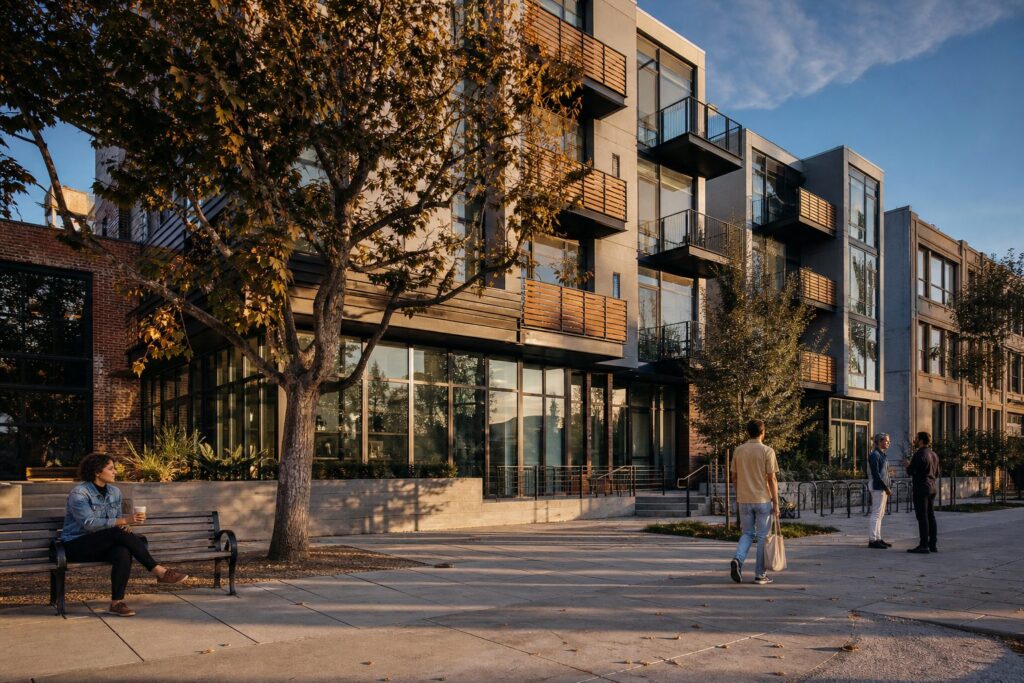
The Los Angeles City Council just approved $466 million in affordable housing funding. How will this record spending affect the housing market for buyers and sellers across Los Angeles?
This is the largest affordable housing allocation in Los Angeles history, and while it primarily funds rental housing construction, the ripple effects will touch home values, neighborhood conditions, and your buying or selling strategy across the city.
Why This Matters Right Now in Los Angeles
If you own property in Los Angeles, or you’re thinking about buying, you need to understand what $466.6 million in housing investment means for your financial picture. The L.A. City Council unanimously approved this funding in September 2026, according to multiple reports including The Real Deal, topping last year’s $387 million allocation.
Here’s what makes this moment different: roughly 70% of the funding, about $324.1 million, comes from Measure ULA, the transfer tax on property sales above $5.4 million. That means the luxury market is directly funding this expansion. The remaining balance draws from county housing funds, California SB 2 housing allocations, and the city’s Affordable Housing Linkage Fee.
So how does a policy that builds affordable rentals affect you if you’re buying a single-family home in Granada Hills or selling your place in Santa Clarita? Let me walk you through it.
What the $466 Million Actually Funds in Los Angeles
Before you can evaluate the market impact, you need to know where this money is going. The funding breaks down into seven distinct programs:
- $123.5 million for ULA Multifamily Affordable Housing covering new construction projects with 40 or more units
- $115.5 million in pooled multifamily funding for projects seeking low-income housing tax credits
- $104.1 million for alternative construction models including innovative new approaches to building
- $38.4 million for operating assistance to stabilize existing affordable housing
- $32.7 million for acquisition and rehabilitation of existing buildings
- $27 million for portfolio preservation protecting current affordable units
- $25.4 million for alternative preservation models addressing units facing financial challenges
Applications opened October 13 and close December 4, according to the LA Housing Department. Recipients will be announced in February 2027, with City Council reviewing and approving awards by April.
What does that tell you? This money won’t produce new housing overnight. Think in terms of years, not months. But the spending plan does include quarterly reporting requirements so the public can track progress, a point LA City Controller Kenneth Mejia has emphasized strongly.
How Los Angeles Buyers Should Evaluate This Funding
If you’re a buyer in today’s market, here’s my honest take: this affordable housing spending is not going to change your monthly mortgage payment or help you win a bidding war next month. But it matters for your long-term investment.
The Los Angeles housing market is already offering you more room to work with than we’ve seen in years. As of mid-2026, the City of Los Angeles median home sale price sits at approximately $1,055,000, according to multiple data aggregators, down about 1.4% from the same period last year. Days on market have stretched to 55 days, and inventory has grown 49% year-over-year as of July 2026, per housing market data. The sale-to-list price ratio is at 99.11%, which means negotiating room exists.
So what does the $466 million add to that picture?
For first-time buyers, the funding primarily targets rental housing. But here’s the indirect benefit I explain to my clients: when you add affordable rental supply to underserved neighborhoods, you reduce rental market pressure. That gives renters more time to save for a down payment instead of being priced out. The California Association of Realtors reports that only 18% of California households can currently afford the median-priced home in 2026.
If you’re looking at neighborhoods like Silver Lake, where the March 2026 median sale price reached about $1.3735 million and rent growth has surged 25% to 26% in recent years, more rental supply could modestly cool that pressure over time.
What Los Angeles Sellers Need to Know About Measure ULA’s Role
Here’s where it gets personal for sellers, and the answer depends entirely on your price point.
If your property is valued under $5.4 million: You have no direct Measure ULA tax exposure. The affordable housing investment may actually help you over time by improving neighborhood infrastructure, reducing blight through building rehabilitation, and bringing new residents and spending power into nearby areas. The first funding round supported 80 projects that promised 1,288 new affordable units and preservation of 3,713 more, according to reporting by The Real Deal, primarily in downtown, South L.A., and Koreatown.
If your property is valued above $5.4 million: Measure ULA’s 4% to 5.5% transfer tax is a real cost. The measure has raised more than $1.3 billion since it took effect in 2023, and it serves as the primary engine behind these record funding rounds. Before Measure ULA, the city’s typical affordable housing funding rounds ranged between $50 million and $75 million.
With 10 five-star client reviews and a Circle of Excellence recognition, I’ve guided sellers through complex transactions across the San Fernando Valley and Santa Clarita. What I tell every seller right now is this: understand your net proceeds before you list. If you’re in the luxury segment, that Measure ULA cost needs to be factored into your pricing strategy from day one. Luxury home sellers in particular should consult with an advisor experienced in handling high-value transactions affected by transfer taxes.
The Ripple Effect on Los Angeles Neighborhoods and Property Values
This is the question I get most often: will more affordable housing hurt my property values? The answer is more nuanced than most people expect.
The data actually suggests that well-designed affordable housing can stabilize or even improve property values in surrounding areas, particularly when the alternative is vacant lots or deteriorating buildings. The rehabilitation and preservation components of this funding, totaling nearly $85 million, specifically target existing properties that might otherwise fall into disrepair.
Consider what’s happening across Los Angeles right now. Multifamily development remains difficult to pencil across L.A. County. Developers have slowed construction amid weak economics, and multifamily sale prices have fallen roughly 30% over the past five years, according to industry analysis. This new funding bridges that financing gap for projects that otherwise wouldn’t get built.
For neighborhoods like Silver Lake, where Walk Score rates walkability at 81 and homes near Sunset Junction score as high as 93, or for communities in the San Fernando Valley where families rely on strong school options and park access, the question isn’t whether affordable housing is being built nearby. It’s whether your neighborhood is receiving the kind of investment that supports long-term value.
Housing supply in Los Angeles has improved to 4.6 months but remains below a balanced market, while declining new construction continues to support prices, according to current market tracking data.
How Investors and Multifamily Owners Should Respond in Los Angeles
If you own or are considering purchasing investment property, this funding creates both opportunity and something to watch.
Eligible applicants for the seven programs include public entities, community land trusts, limited equity housing cooperatives, and both nonprofit and for-profit developers. Projects must build new or convert non-residential structures into multifamily affordable housing with a minimum of 40 units.
The income-targeting requirements are strict. Projects using county housing funds must reserve 25% of units for households at or below 30% of Area Median Income and another 25% for households at or below 50% of AMI. Operating assistance units must serve households at 80% AMI or below.
What does this mean for you as a private investor? The affordable housing pipeline won’t directly compete with your market-rate units, but it will add housing supply to the overall ecosystem. In a market where the average Los Angeles home value is $949,479 and homes go to pending in around 26 days, according to current data, that additional supply is a long-term consideration worth watching.
As a real estate advisor specializing in first-time homebuyers, VA veteran buyers and sellers, and clients relocating out of state, I pay close attention to how policy shifts affect the neighborhoods I serve across the Santa Clarita Valley and San Fernando Valley.
Frequently Asked Questions
Does the $466 million in affordable housing funding lower home prices in Los Angeles?
Not directly. The funding targets affordable rental construction and preservation, not for-sale homes. The indirect effect over several years may modestly slow price growth in neighborhoods receiving significant new supply, but the Los Angeles market’s core driver remains the gap between overall housing demand and available inventory.
Who pays for this affordable housing spending?
Roughly 70% of the funding, about $324.1 million, comes from Measure ULA, the transfer tax applied to Los Angeles property sales above $5.4 million, according to the approved allocation breakdown. The remainder comes from county housing funds, state SB 2 allocations, and the city’s Affordable Housing Linkage Fee.
Does Measure ULA affect my sale if my home is under $5.4 million?
No. Measure ULA’s 4% to 5.5% transfer tax only applies to sales above the $5.4 million threshold. If your property is below that level, you are not subject to this tax.
When will new affordable housing units from this funding actually be built?
Applications close December 4, 2026, and the LA Housing Department will announce recipients in February 2027, with City Council approval expected by April. Construction timelines vary by project, but expect two to four years before most units become available.
How many affordable housing units will this $466 million create?
The exact number depends on which projects are selected and their financing structures. For context, last year’s $360.9 million allocation funded 80 projects promising 1,288 new affordable units and preservation of 3,713 more, according to reporting by The Real Deal.
Will affordable housing construction affect neighborhoods in the San Fernando Valley?
The first round of funding concentrated projects in downtown, South L.A., and Koreatown. Projects in this round will depend on which developers apply and where eligible sites exist. The Valley could see projects if qualifying applications are submitted.
How does this funding affect Los Angeles renters?
Projects must reserve significant portions of units for lower-income households. For example, certain programs require 25% of units for households at or below 30% of Area Median Income and another 25% for those at or below 50% AMI, per the program requirements.
Is now a good time to buy in Los Angeles given this market shift?
Current market conditions show inventory growth of 49% year-over-year as of July 2026, prices softening by 1.4% in the City of Los Angeles, and days on market stretching to 55 days, according to housing market data. These conditions give you more leverage than buyers have had in years.
How does the affordable housing spending affect luxury home sellers?
Measure ULA’s transfer tax on sales above $5.4 million is a direct cost. The measure has raised more than $1.3 billion since 2023, according to multiple reporting sources. Luxury sellers should factor this tax into net proceeds calculations and pricing strategy.
Will there be accountability for how the $466 million is spent?
Yes. The spending plan includes an amendment requiring the LA Housing Department to provide quarterly updates on funding distribution, project timelines, and any significant delays or challenges. LA City Controller Kenneth Mejia has also called for detailed breakdowns.
The Bottom Line for Los Angeles Buyers and Sellers
This $466.6 million allocation is a significant policy move, but it’s not a short-term market disruptor for most buyers and sellers. If you’re purchasing a home in the San Fernando Valley, Santa Clarita, or Granada Hills, your immediate focus should remain on mortgage rates, inventory, and pricing strategy. If you’re selling above $5.4 million, Measure ULA is a real cost that requires planning.
The long-term picture is about supply. Los Angeles needs more housing at every level, and this funding addresses one piece of that puzzle. My goal as your real estate advisor is to help you make confident decisions whether you’re buying your first home, selling to relocate, or navigating VA benefits. If you have questions about how these market shifts affect your specific situation, I’m here to help. You can reach me, Lata Agadjanova, at Park Regency Realty: 818-620-7635.
*This content is for educational purposes. Consult qualified professionals for advice specific to your situation. DRE License 01983686.*