
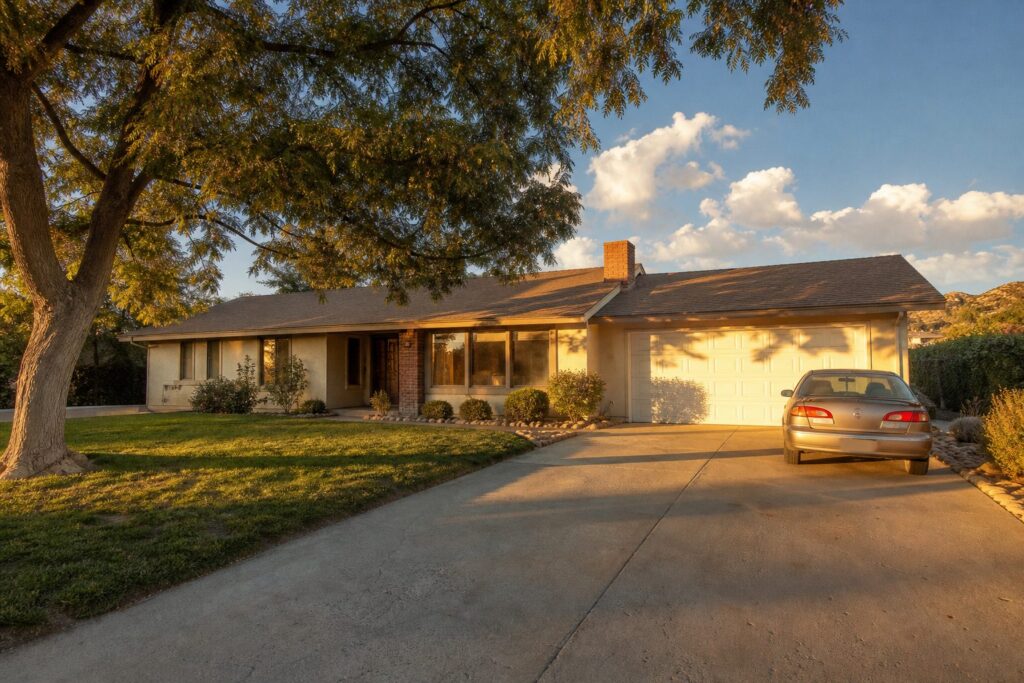
Your home is in a family trust, and now you want to sell. What actually happens next?
You can absolutely sell a home held in a family trust. If the trust is revocable and you are the grantor, you retain full control and sell just like any other Saugus homeowner. If you inherited the property as a successor trustee, you will need specific documents and a clear process, but court approval is typically not required.
Why This Matters Right Now in Saugus, Santa Clarita
Saugus is one of those neighborhoods where families have been rooted for decades. Most homes here were built between 1970 and 1999, which means many original owners are now passing properties to the next generation through trusts. With the median sale price in Saugus sitting at $790,000 (down 3.7% from the prior year, per recent local market data), the financial stakes of getting a trust sale right are enormous.
I work with families across the Santa Clarita Valley and San Fernando Valley who are navigating exactly this situation. Whether you placed your own home in a revocable living trust years ago or you recently became a successor trustee after losing a parent, the process can feel overwhelming. According to The State of Inherited Property Report 2026, 26% of respondents reported receiving property through a living trust. That means roughly one in four inherited properties comes through a trust rather than probate, and the questions I hear are growing more frequent every month.
So let me walk you through exactly what happens, step by step, when a trust-held home in Saugus needs to be sold.
Who Actually Has the Authority to Sell a Saugus Trust Property?
This is the first question you need to answer, and it is the one that trips families up the most. The trustee is the only person with legal authority to sell trust property. Not the beneficiaries. Not the adult children, unless they are the named trustee.
Here is how it works depending on your situation:
- You are the original grantor and still alive. If you created a revocable living trust and placed your Saugus home in it, you retain full control. You can sell your home on Bouquet Canyon Road or Barrington Way exactly the way you would if it were in your personal name. The trust does not create any additional hurdle.
- The grantor has passed away. The trust typically becomes irrevocable, and the successor trustee named in the document steps in. Most revocable living trusts grant the successor trustee explicit authority to sell real property. You will need certified death certificates and a Certificate of Trust (sometimes called a Trust Affidavit) to prove your authority to the title company and the buyer.
- The trust was irrevocable from the start. The trustee manages assets for the benefit of named beneficiaries. If the trust document authorizes real property sales, the trustee can proceed, but extra care and often legal counsel are warranted.
What I tell my clients is this: before you do anything else, read the trust document. The answer to almost every question about authority lives in those pages.
The Step-by-Step Process for Selling a Trust-Held Home in Santa Clarita
You do not need to remove the home from the trust to sell it. That is one of the most common myths I encounter, and it actually creates more problems than it solves. Removing the home adds paperwork, may temporarily expose the property to probate, and accomplishes nothing useful.
Here is the trustee checklist I walk families through:
- Confirm the title is held in the trust’s name. This is critical. If the deed was never recorded in the trust’s name, you may face what is called an “unfunded trust,” which is the single most costly mistake in trust real estate. It can require a court petition or even probate to fix.
- Review the trust document for sale provisions. Look for language authorizing the trustee to sell, transfer, or dispose of real property.
- Obtain a Certificate of Trust. This document summarizes the trust’s key details without disclosing private terms. Title companies and buyers will require it.
- Notify beneficiaries. Even if the trust does not strictly require approval, keeping all beneficiaries informed protects you as trustee and reduces the risk of disputes down the line.
- Assemble your professional team. You will want a real estate attorney, a CPA, and an agent who understands trust transactions. With 10 five-star reviews and a Circle of Excellence designation, I specialize in trust property sales and estate real estate right here in Santa Clarita.
- Prepare the property for sale. Repairs, staging, and disclosures all apply just as they would in a standard sale.
- Sign documents as trustee. You sign as “Jane Smith, Trustee of the Smith Family Trust,” not simply as Jane Smith.
- Distribute proceeds according to the trust’s terms. Keep detailed accounting records. Trustees who fail to document everything risk personal liability.
The typical timeline for selling a trust-held home after the grantor’s passing is two to four months once the successor trustee has legal authority and the property is ready to list. Compare that to probate, which can drag on for six to eighteen months.
Tax Implications You Cannot Afford to Ignore in Saugus
This is where the real money is at stake, and it is where I see families make expensive mistakes by not getting proper guidance early.
Revocable Trust: Same Tax Treatment as Individual Ownership
If you are selling your own home from your revocable trust while you are alive, here is the good news: the tax treatment is identical to selling it in your personal name. You still qualify for the Section 121 primary residence exclusion, which allows you to exclude up to $250,000 in capital gains ($500,000 for married couples filing jointly), provided you meet the ownership and use requirements. IRC Section 121(d)(9)(C) specifically confirms that grantor trust property qualifies.
Stepped-Up Basis After Inheritance
If you inherited the property through a revocable trust, you likely received a stepped-up cost basis to the home’s fair market value on the date of death. What does that mean for your wallet? If a parent purchased a Saugus home decades ago for $150,000 and it is now worth $790,000, the stepped-up basis eliminates the gain on that entire appreciation. You would owe capital gains tax only on any increase in value after the date of death.
This is why selling relatively soon after inheriting can be so advantageous. Inherited property automatically receives long-term capital gains treatment regardless of how quickly you sell, per current IRS rules.
Trust Bracket Compression: A Trap for the Unprepared
Here is something many families overlook entirely. If gains are retained inside an irrevocable trust rather than distributed to beneficiaries, the trust hits the top federal tax bracket of 37% at just $16,000 of taxable income, according to IRS Revenue Procedure 2025-32. By contrast, individual taxpayers do not reach that same bracket until income exceeds $640,600 for single filers.
The Net Investment Income Tax adds another 3.8% on top, and for trusts it kicks in at that same low $16,000 threshold. For individuals, it does not apply until modified adjusted gross income exceeds $200,000 (single) or $250,000 (married filing jointly).
What I always recommend is that families consult a CPA before closing to determine whether distributing gains to beneficiaries could save thousands in taxes.

What Happens When Siblings Disagree About Selling in Saugus
With single-family homes in Central Saugus carrying a median price of $865,000, you are not talking about a small asset. When multiple siblings are beneficiaries, disagreements about whether to sell, when to sell, or at what price can become genuinely contentious.
The trustee has a fiduciary duty to act in the best interests of all beneficiaries and to obtain fair market value for the property. If the trust directs the trustee to sell and distribute proceeds, the trustee generally has both the authority and the obligation to do so, even if one beneficiary would prefer to keep the property.
If a beneficiary wants to buy the property from the trust, that is possible, but it creates a conflict of interest that demands extra care. You need an independent appraisal (not the beneficiary’s estimate), written consent from all other beneficiaries, and attorney oversight to ensure the sale price is demonstrably fair.
Trustees who breach their fiduciary duties can be held personally liable, so documentation is everything. Get broker opinions of value, order an appraisal, and keep records showing you took reasonable steps to secure the highest price.
Why a Trust Sale Beats Probate for Saugus Families
If you are comparing the two paths, trust sales win on virtually every front:
- No court appointment required. Your authority comes from the trust document, not a judge.
- No court hearings. The sale proceeds without judicial oversight in most cases.
- Faster timeline. Two to four months versus six to eighteen months for probate.
- Lower legal costs. No probate attorney fees or court filing fees.
- Privacy. Trust documents are not public record. Probate filings are.
Both trust sales and probate sales qualify for stepped-up basis on revocable trust property, so the tax benefit is preserved either way. But the speed, cost, and privacy advantages of a trust sale are significant.
Frequently Asked Questions
Do I need to remove my Saugus home from the trust before selling?
No. Removing the home from the trust adds unnecessary paperwork and may temporarily expose the property to probate. You can sell real estate while it remains held in a trust. The trustee signs the deed on behalf of the trust, and the transaction proceeds normally through title and escrow.
Can I still get the capital gains exclusion when selling from a trust?
Yes, if the trust is a revocable grantor trust and you meet the ownership and use requirements. IRC Section 121(d)(9)(C) treats the sale as if made by the taxpayer personally. You can exclude up to $250,000 in gains ($500,000 for married couples filing jointly).
What is stepped-up basis and does it apply to trust property in California?
Stepped-up basis resets your cost basis to the property’s fair market value at the date of death. It applies to property held in revocable trusts. California is a community property state, which means the surviving spouse receives a stepped-up basis on the entire property at death, including their own half.
How long does a trust sale typically take in Santa Clarita?
Selling a house in a trust after the grantor’s death typically takes two to four months once the successor trustee has legal authority, the property is secured and insured, and the home is ready to list. This is significantly faster than probate, which can take six to eighteen months.
What if the home was never properly titled in the trust’s name?
This is the most common and costly mistake in trust real estate. If the deed was never recorded in the trust’s name, the trustee cannot sell as trustee. You may need a court petition or probate proceedings to resolve the title issue. Families still in the planning stage should verify that the deed has been properly recorded.
Do all beneficiaries have to agree before the trustee sells?
Not necessarily. If the trust document grants the trustee authority to sell, the trustee can typically proceed without unanimous beneficiary consent. However, keeping all beneficiaries informed reduces the risk of disputes, and some trust documents do require beneficiary approval.
What are the tax brackets for capital gains inside a trust in 2026?
Per IRS Revenue Procedure 2025-32, trusts pay 0% on the first $3,300 of long-term capital gains, 15% on gains between $3,300 and $16,250, and 20% above $16,250. The top bracket hits at a much lower threshold than for individual taxpayers.
Can a beneficiary buy the property from the trust?
Yes, but it requires extra safeguards. You need an independent appraisal, written consent from all other beneficiaries, and attorney documentation. The sale price must be demonstrably at fair market value to protect the trustee from liability claims.
What documents do I need to sell a trust-held home?
You will typically need the trust document or Certificate of Trust, certified death certificates (if the grantor has passed), a Trustee’s Deed upon Sale, the settlement statement, and any required beneficiary notifications. A trust-experienced agent and real estate attorney can guide you through the specifics.
Is it better to sell an inherited Saugus property quickly or wait?
Selling soon after inheritance is generally the most tax-efficient approach. Capital gains tax applies only to appreciation that occurs after the date of death, so a quick sale typically results in little or no taxable gain. Waiting means any additional appreciation becomes taxable.
The Bottom Line
Selling a trust-held home in Saugus does not have to be complicated, but it does require you to follow the right steps in the right order. Confirm your authority as trustee, verify the title, assemble the right professional team, and understand the tax implications before you list.
With the current Saugus median sale price at $790,000 (per recent local market data) and home values varying widely between Central Saugus and Saugus North, the financial decisions you make during a trust sale can impact your family by tens of thousands of dollars. This is not the time to guess.
I am Violetta Agadjanova with Park Regency Realty, and trust property sales are one of my core specialties. Whether your family home is off Bouquet Canyon Road, near Central Park, or up in the Saugus North hills, I can walk you through every step from trust review to closing. Reach me at 818-620-7635 to start the conversation.